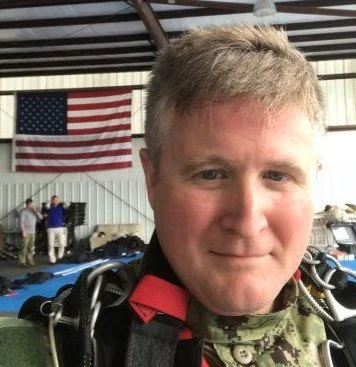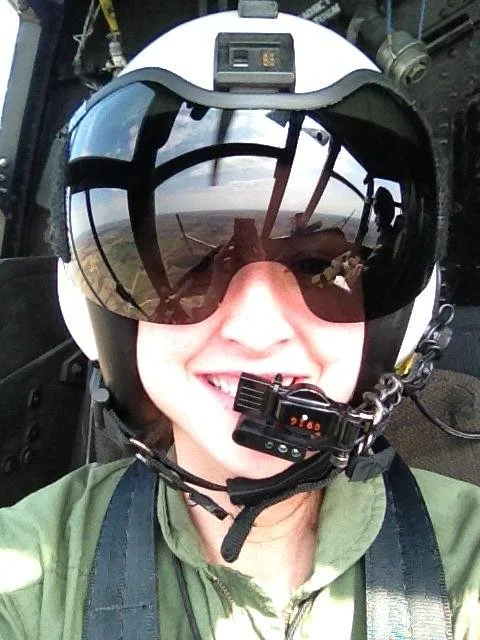
The Charles International Law Story . .
An Unconventional (Warfare) Path to the Law
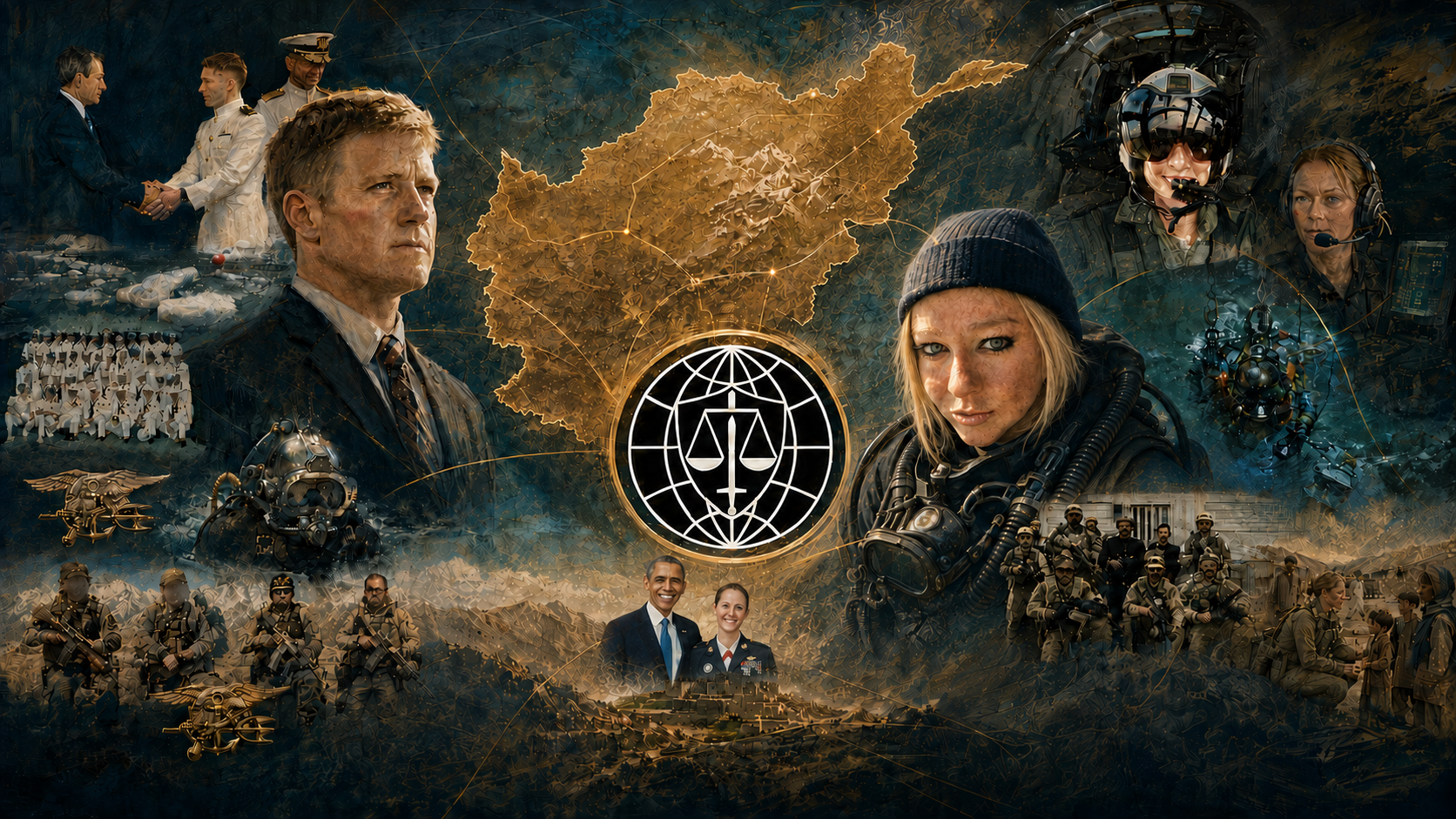
Charles International Law did not begin with a traditional law-firm business plan. Its origins reach back to the U.S. Naval Academy, the Navy SEAL Teams, the U.S. Intelligence Community, and the international partnerships forged during the years following September 11.
Nathan M. F. Charles left active-duty service with the SEAL Teams in 2007 intending to attend law school. First, however, he needed to earn a living. While applying to law schools, Nathan joined a defense contractor supporting the Defense Threat Reduction Agency, where he worked on some of the country’s most difficult national-security challenges involving weapons of mass destruction.
Around the time he entered law school, Nathan accepted a civilian government position with the Agency as a counterterrorism planner. Although he had left active duty, the work placed him alongside many of the same colleagues from the United States Special Operations Command. In many respects, it felt as though he had never left—except that he was now wearing a suit instead of a uniform.
Nathan also continued serving in the Navy Reserve. At the same time, he attended the Washington College of Law at American University through its evening program, balancing national-security work with his legal education. He earned his law degree at the end of 2012.
From National Security to the Practice of Law
In early 2013, Nathan began a judicial clerkship with the Supreme Court of Pennsylvania. He served at the Court for most of that year, gaining an inside view of appellate decision-making and the judicial process.
In early 2014, however, his two professional lives converged once again. Nathan was recalled to active duty and assigned as a staff officer supporting overseas operations by the Naval Special Warfare Development Group—commonly known as SEAL Team Six. The assignment took him back to Afghanistan for another year.
After completing those orders at the end of 2014, Nathan entered the Attorney General’s Honors Program. In early 2015, he joined the National Security Division of the United States Department of Justice as a federal prosecutor in its Counterintelligence and Export Control Section.
His work at the Justice Department drew upon the same combination of legal training, operational experience, and international perspective that would later define Charles International Law. Even then, however, his military service was not over. In 2018, Nathan was again mobilized to active duty to support Naval Special Warfare operations.
The Beginning of Charles International Law
Nathan left the Justice Department around the start of the COVID-19 pandemic and spent about six months in Alaska. He returned home near the end of 2020 intent on establishing his own private practice.
Almost immediately, military service intervened again. Shortly after starting the firm, Nathan was recalled to active duty during the COVID-19 crisis. He spent approximately six months at the Pentagon helping coordinate the government’s pandemic response.
When those orders ended, Nathan was finally able to begin building Charles International Law in earnest. The timing proved consequential. Just as the firm was getting underway, the government of Afghanistan collapsed.
August 2021: A Firm Finds Its Mission
Kabul fell to the Taliban on August 15, 2021. That crisis brought Nathan and Alanna together.
Working through a nonprofit organization, they joined the effort to evacuate Afghans endangered by their relationships with the United States—particularly those who had worked alongside U.S. Special Operations Forces and the American intelligence community during the preceding twenty years.
These were not abstract questions of law or policy. They involved real people, families in immediate danger, and former partners whom the United States had promised not to abandon. Getting them to safety required more than operational experience or personal commitment. It required navigating a legal system that was extraordinarily complex even before it was overwhelmed by a humanitarian emergency.
By necessity, Nathan and Alanna had to become experts in asylum and humanitarian immigration law almost overnight. What began as an emergency effort to help America’s Afghan partners became one of the foundations of Charles International Law.
The firm’s immigration practice did not begin as a calculated effort to enter a promising legal market. It arose from a crisis, a sense of responsibility, and the conviction that the people who stood beside the United States should not be forgotten when they needed the United States to stand beside them.
A Practice Built for a World in Motion
The rest, as they say, is history. Through that work, we discovered more than an urgent need for capable legal representation. We discovered our calling. We knew that we wanted to spend our careers building a law firm that operates at the seams between national security, human rights, asylum, and international law.
Our collective experience overseas also taught us that many of the most difficult legal problems do not fit neatly within a single practice area—or even within a single country’s borders. They involve overlapping legal systems, competing jurisdictions, international commerce, government action, human mobility, and questions of individual liberty and national security.
Charles International Law was built to confront those problems.
We begin with an inescapable reality of the coming century: people will continue to move. They will go where they can find work. They will seek governments capable of protecting them and their families. They will flee war, persecution, instability, and environmental disruption. That movement will create opportunities, but it will also present difficult questions involving borders, sovereignty, security, and human rights.
Commerce will continue to cross borders as well. Modern businesses depend upon international supply chains, just-in-time shipping, overseas labor, maritime transportation, and commercial relationships that may span several legal systems. When those systems collide, seemingly ordinary disputes can quickly become jurisdictionally and legally complex.
We want to be ready for those challenges—not merely the legal problems confronting our clients today, but those that will emerge as the world becomes more interconnected. That is why Charles International Law exists: to represent people and organizations confronting consequential legal problems that cross borders, implicate national security or human rights, and demand more than a conventional approach to the law.